

Nearly 177 UK prize draw operators have now signed a government code promising safer, fairer entries by mid-2026. That single fact says a lot about how mainstream, and how carefully watched, the world of competition entering, known as “comping,” has become. For disabled people weighing up new hobbies that fit around fatigue, pain, or unpredictable health, comping for disabled people raises a fair question: can entering competitions really work as a flexible hobby, rather than another source of stress?
According to a September 2026 feature on Disability Horizons, the answer is yes, but only with realistic expectations and a clear understanding of how winnings interact with benefits.[1]
Key Takeaways
- Comping for disabled people works best as a low-pressure hobby, not a reliable income source, since even experienced compers cannot predict wins.[1]
- Non-means-tested benefits like PIP, DLA, and Attendance Allowance are unaffected by competition prizes of any value.[1]
- Means-tested benefits such as Universal Credit can be affected once cash prizes push savings above £6,000, with entitlement lost above £16,000.[1]
- Non-cash prizes, such as gadgets or holidays, generally do not count as capital unless sold.[1]
- New government and advertising rules aim to make prize draws fairer and safer for hobbyist entrants.[3][8][11]
What Is Comping, and Why Disabled Hobbyists Are Drawn to It
Comping simply means regularly entering competitions and prize draws, often for fun rather than financial necessity. Disability Horizons frames it explicitly as a hobby rather than work, pointing out that outcomes are never guaranteed no matter how many entries someone submits.[1]
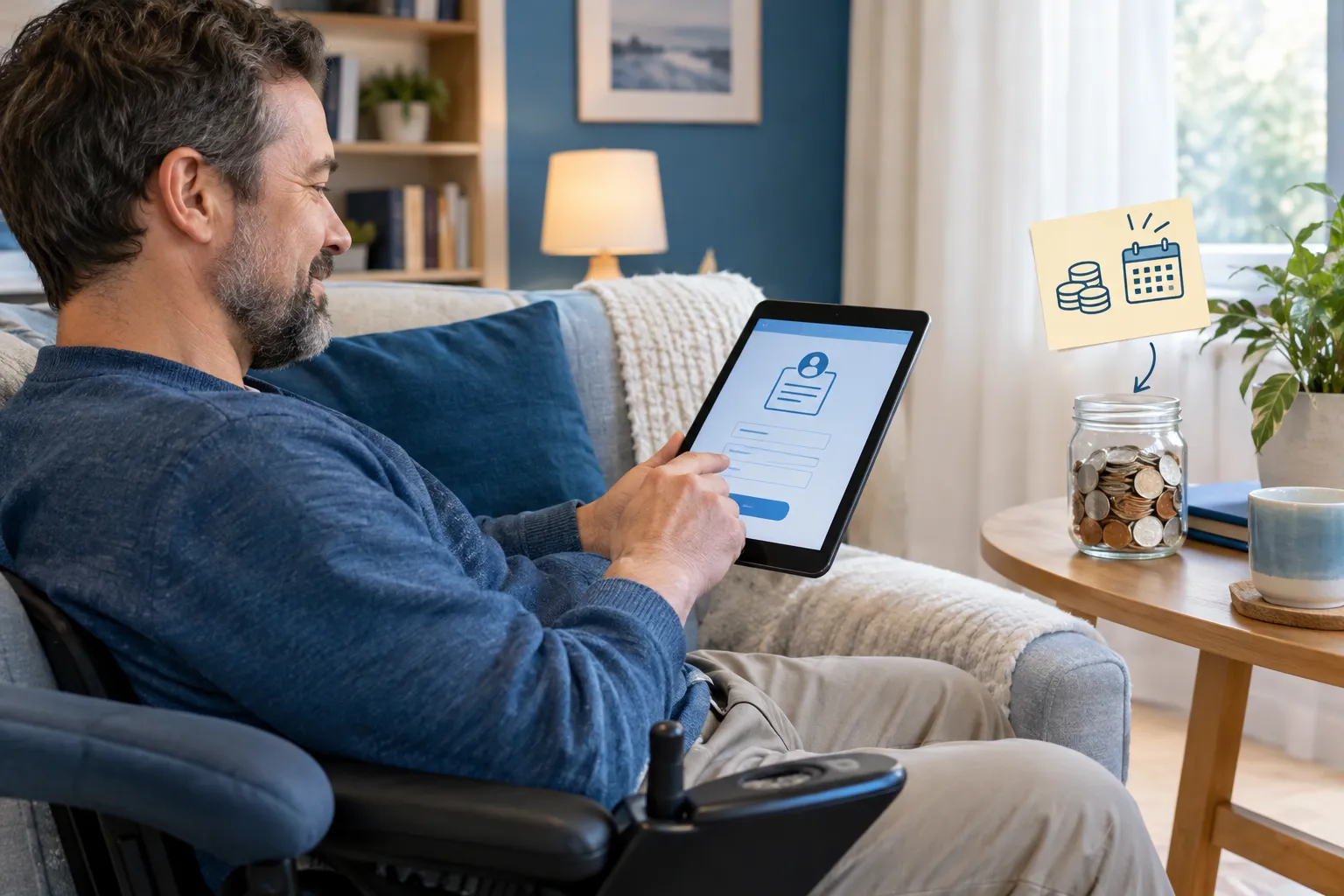
That unpredictability is actually part of the appeal for many disabled hobbyists. Comping can be done from bed, paused during flare-ups, and picked up again without penalty. There are no shifts, deadlines, or physical demands. The publication advises treating any prize as an occasional bonus, never something to budget rent or bills around.[1]
This flexibility is why comping for disabled people is increasingly discussed alongside other low-cost, low-commitment hobbies suited to variable energy levels.
Comping for Disabled People: How Prizes Affect UK Benefits
One of the biggest concerns for disabled entrants is whether winning could jeopardize existing support. Disability Horizons offers a clear breakdown of 2026 rules.[1]
For non-means-tested benefits, there is no issue at all:
- Personal Independence Payment (PIP)
- Disability Living Allowance (DLA)
- Attendance Allowance
None of these are affected by prize winnings, whether the prize is a small voucher or a car.[1]
Means-tested benefits work differently. Cash prizes count as capital once deposited in a bank account. According to the guidance:
- Savings under £6,000 total: no impact on Universal Credit, Housing Benefit, Pension Credit, or income-related ESA
- Savings between £6,000 and £16,000: entitlement is gradually reduced
- Savings above £16,000: Universal Credit entitlement is lost entirely while savings remain at that level[1]
Non-cash prizes, such as holidays, tablets, or gift experiences, are generally not treated as capital unless the recipient sells them.[1] This makes in-kind prizes a comparatively simpler outcome for anyone worried about savings thresholds, and it explains why many disabled compers deliberately favor competitions offering goods over cash.
Staying Safe: Regulation, Scams, and Spending Limits
Comping’s growth has not gone unnoticed by regulators. A May 2026 BBC report on prize draw addiction described the UK’s pay-to-enter sector as expanding rapidly, with some entrants prioritizing draws over essential spending.[3] The government has since called prize draws a “significant and growing market” and introduced a voluntary code of good practice.[3][11]
Under that November 2025 code, updated through 2026, operators offering a genuinely free entry route avoid needing a gambling licence, but they must still meet fairness and transparency standards.[11] At least 177 operators had signed up by May 2026, agreeing to safeguards including age limits, bans on credit-card use for instant-win draws, and proportionate spending limits.[3][11]
Separately, updated Advertising Standards Authority guidance from June 2026 requires promoters to run draws under proper supervision, award prizes as described, and clearly disclose significant conditions.[8] Crucially, promotions cannot require a payment simply to claim a prize.[8] Together, these protections create a more predictable environment for hobbyist entrants, including disabled people who may be more vulnerable to misleading offers.
Disability Horizons recommends sticking mainly to free-to-enter competitions and avoiding overspending on paid entries, a habit that keeps comping genuinely low-cost.[1]
Disability-Focused Competitions Beyond Prize Draws
Comping for disabled people is not limited to retail giveaways. Several competitions actively center disability innovation and creativity, turning entering into a form of advocacy.
The ITU’s Accessible Europe 2026 pitching competition invites accessible ICT projects through a structured submission and screening process, positioning disabled innovators as contributors rather than passive entrants.[2] The AccessCoVE Innovation Competition runs entirely online in English for students aged 12 to 18, with and without disabilities, allowing global participation regardless of access needs.[5]
Elsewhere, Microsoft’s AI for Accessibility hackathon, launched with the University of Indonesia in 2026, invites young developers across Southeast Asia to build accessibility-focused AI tools through defined online submission phases.[6] Creative outlets exist too: the Easterseals Disability Film Challenge offers mentorship, production grants, and equipment prizes within a fixed challenge window, and other disability-focused contests cover modeling and journalism, often welcoming remote submissions.[7][12]
Comping for Disabled People: Can Entering Competitions Be a Flexible Hobby That Lasts?
Taken together, current evidence suggests comping can be a sustainable hobby for disabled people when approached with clear boundaries. Favoring free entries, understanding benefit rules, and choosing reputable or accessibility-themed competitions all reduce risk while preserving flexibility.[1][7] As regulators tighten consumer protections and more inclusive contests emerge, opportunities for disabled hobbyists to participate safely and meaningfully are likely to keep growing.[2][3][11]
Conclusion
Comping for disabled people can absolutely function as a flexible, low-pressure hobby, provided it stays firmly in “hobby” territory rather than becoming a financial plan. The practical next steps are straightforward: prioritize free entries, learn how cash versus non-cash prizes affect specific benefits, stick to regulated or code-signed operators, and consider disability-focused competitions that offer creative or advocacy value alongside prizes. Approached this way, comping fits naturally around variable health, offering enjoyment without added financial or bureaucratic risk.
References
[1] Comping For Disabled People Can Entering Competitions Be A Flexible Hobby – https://disabilityhorizons.com/2026/09/comping-for-disabled-people-can-entering-competitions-be-a-flexible-hobby/ [2] Pitching Competition – https://www.itu.int/en/ITU-D/Regional-Presence/Europe/Pages/Events/2025/12.03-04_Accessible%20Europe/PITCHING-COMPETITION.aspx [3] C86e7yv6en6o – https://www.bbc.co.uk/news/articles/c86e7yv6en6o [5] Innovation Competition – https://accesscove.org/innovation-competition/ [6] Microsoft Gandeng Ftui Kompetisi Hackathon Ai For Accessibility 2025 – https://megapolitan.antaranews.com/berita/409557/microsoft-gandeng-ftui-kompetisi-hackathon-ai-for-accessibility-2025 [7] Competitions – https://www.disabled-world.com/entertainment/competitions/ [8] Promotional Marketing Prize Draws – https://www.asa.org.uk/advice-online/promotional-marketing-prize-draws.html [11] Voluntary Code of Good Practice for Prize Draw Operators – https://www.gov.uk (referenced via [3]) [12] Competitions – https://www.disabled-world.com/entertainment/competitions/