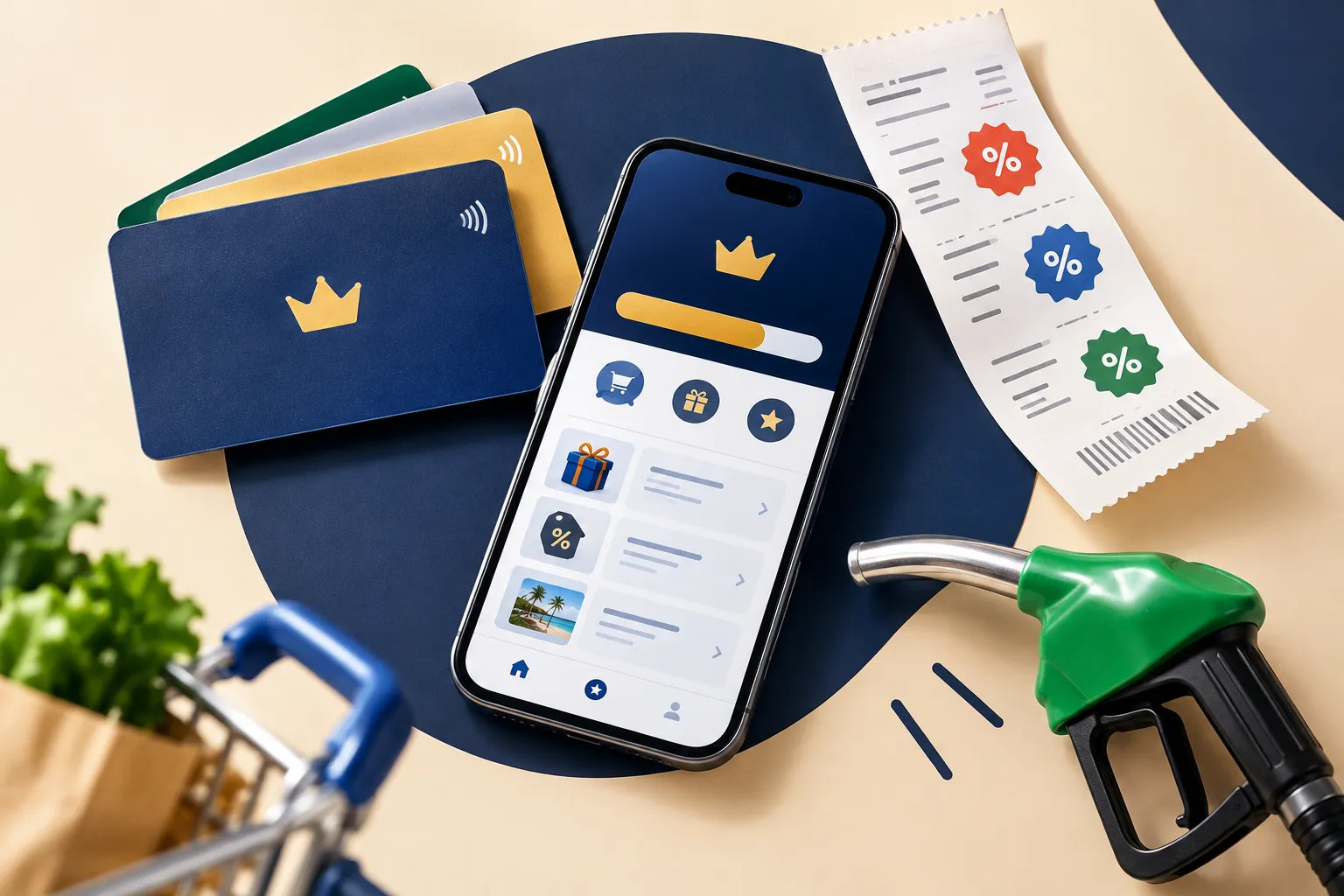
A single grocery trip in late 2026 might earn a shopper points at the register, a personalized coupon on an app, and status toward a members-only event, all from one purchase. That layering of benefits is exactly why loyalty schemes compared side by side look so different from the punch-card programs of a decade ago. Retailers, banks, and travel brands are rebuilding their rewards structures at a pace not seen in years, and the differences between programs now matter more to household budgets than ever.
This article breaks down how major loyalty schemes compared across grocery, convenience, travel, and finance are evolving, what design choices are working, and what shoppers should look for before committing their spending to any single program.
Key Takeaways
- Loyalty participation is now mainstream: most consumers say rewards programs influence where they shop, especially for groceries.
- Grocery and convenience chains are shifting from simple discounts toward tiered, data-driven, and experiential rewards.
- Cross-brand partnerships, from Canadian Tire and Tim Hortons to Hyatt and Delta, are replacing siloed, single-brand loyalty.
- Overly generous rewards structures can backfire financially, forcing retailers like Petco to rework their point ratios.
- Banks are entering the loyalty space aggressively, tying everyday banking to perks once reserved for retail and travel.
Why Loyalty Schemes Compared Matter More in 2026
Inflation has pushed households to scrutinize every dollar, and loyalty programs have become a coping mechanism rather than a nice-to-have extra. Recent industry data shows loyalty programs are widely valued by consumers, with grocery rewards standing out as one of the most actively used categories among shoppers looking to stretch their budgets.
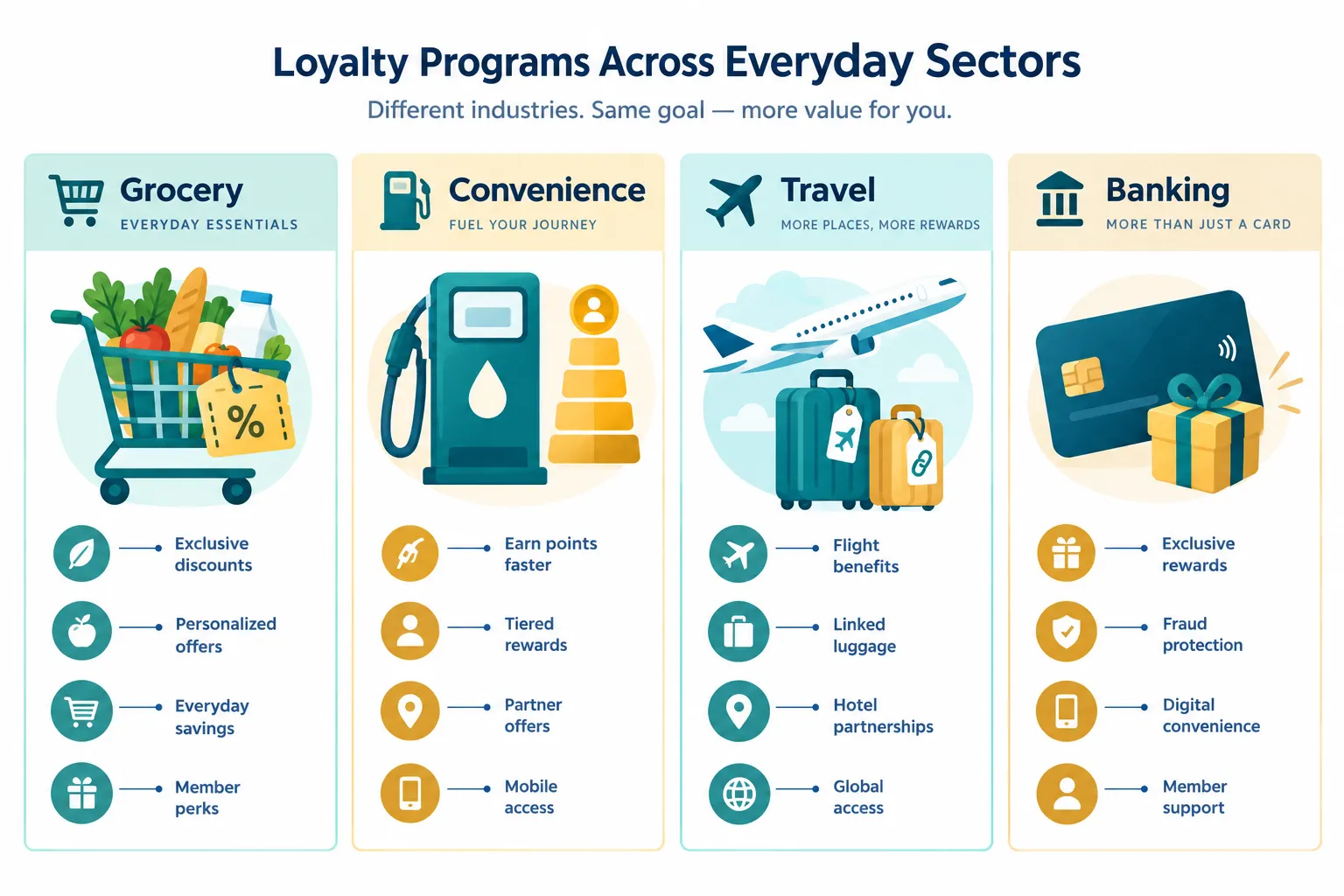
That shift explains why grocery retail is described as being in a “loyalty boom,” marked by digital coupons, personalized pricing, member-only events, tiered structures, and automatic reward redemption [5]. Lidl Plus’s recent U.S. launch and Sprouts Farmers Market’s revamped program, which blends points with experiential touches like a “foragers’ roundtable”, show how chains are trying to differentiate beyond simple percentage-off deals [5].
Grocery and Convenience: Loyalty Schemes Compared Across Channels
Convenience retailers are treating loyalty programs less like discount tools and more like data platforms. Transaction-level insights now drive personalized offers and encourage higher-value shopping trips, with a September 2026 industry feature arguing the real value of these schemes lies in the customer data they generate rather than the rewards themselves [2].
Circle K’s Inner Circle program illustrates this shift concretely. Its full redesign went live in late July 2026, introducing a “rewards ladder” structure that combines point accumulation with tiered benefits, nudging members toward higher spending through clearer progression and recognition [8]. Meanwhile, grocery-fuel partnerships now let shoppers apply grocery rewards directly toward gas purchases, blending two everyday spending categories into a single loyalty relationship [4].
Travel, Finance, and Retail: Cross-Industry Loyalty Schemes Compared
Outside grocery aisles, loyalty schemes compared across travel and banking reveal a common theme: integration across brands and spend-based recognition. Canadian Tire and Tim Hortons have connected their programs so members can earn and redeem across both brands, while World of Hyatt’s partnership with Delta SkyMiles and Carnival’s new Carnival Rewards, which ties status to spend rather than days sailed, show travel loyalty moving away from siloed, activity-based models [6].
Retail is also tying big sales events to program membership rather than offering universal discounts. Target’s upcoming Circle Deal Days on October 6-7, 2026 will reserve its best savings for loyalty members only, reinforcing a pattern where enrollment, not just spending, unlocks the top prices.
Banks are joining the competition too. Ally Financial’s “Loyally” rewards program, rolled out to all customers by May and formally announced September 22, 2026, aims to connect everyday banking activity to tangible perks, while Bank of America and PNC have introduced or revamped their own rewards schemes this year to compete for primary customer relationships.
When Loyalty Programs Backfire: Lessons From Overly Generous Schemes
Not every redesign has gone smoothly. Petco’s loyalty program was reported in early September 2026 to have cost the company millions due to unsustainable reward mechanics [7]. The retailer responded by adjusting its Perks structure so members now earn 10 points per dollar on most products and 30 points per dollar on private-label items, a rebalancing meant to preserve customer value without draining margins [7]. Other chains, including DSW and Chewy, are similarly rethinking VIP tiers to keep programs financially sustainable.
Research from Merkle adds a broader caution: loyalty programs do not create loyalty on their own. They amplify existing loyalty or accelerate its erosion, meaning experience quality across product, service, and digital journeys now matters more than points alone [9]. At Home’s redesigned “Design Rewards” program, launched September 23, 2026 to replace its earlier Insider Perks scheme, reflects this lesson by incorporating customer research, focus groups, and an ongoing consumer panel into its design [1].
How to Choose Among Loyalty Schemes Compared Today
Shoppers weighing loyalty schemes compared across categories should consider a few practical questions:
- Does the program reward everyday purchases, or only occasional big-ticket spending?
- Are points redeemable across partner brands, such as grocery-to-fuel or airline-to-hotel links?
- Does membership unlock exclusive pricing during major sales events?
- Is the earn rate sustainable, or has the retailer recently cut benefits to control costs?
- Does the brand actively use customer feedback to refine the program over time?
Conclusion
Loyalty schemes compared across grocery, convenience, travel, and banking in 2026 reveal an industry in transition, moving from flat discounts toward tiered, data-driven, and partner-connected rewards. The most durable programs combine fair economics with genuine customer input, while the weakest either overextend financially or fail to reflect real shopping habits. Before enrolling in a new program, review its earn rate, redemption flexibility, and recent history of benefit changes. Choosing wisely now can mean meaningfully more value at checkout throughout the rest of 2026.
References
[1] retaildive – https://www.retaildive.com/news/at-home-customers-voice-loyalty-program-evolution/831085/ [2] The Value Is In The Data – https://www.nacsmagazine.com/issues/september-2026/the-value-is-in-the-data [4] Daily News – https://loyalty360.org/Content-Gallery/Daily-News [5] grocerydive – https://www.grocerydive.com/news/pardon-the-disruption-grocery-loyalty-program-revolution/829460/ [6] Customer Success – https://www.customerexperiencedive.com/topic/customer-success/ [7] retaildive – https://www.retaildive.com/news/petco-learns-perils-overly-generous-loyalty-program/829664/ [8] Blog – https://bloyal.com/blog/ [9] Merkle Customer Loyalty Is Built Through Experience Not Rewards Alone – https://www.consultancy.eu/news/14246/merkle-customer-loyalty-is-built-through-experience-not-rewards-alone [10] At Home Gives Its Customers A Voice In Its Loyalty Program Evolution – https://ground.news/article/at-home-gives-its-customers-a-voice-in-its-loyalty-program-evolution